How to Trade Nifty, BankNifty and SENSEX with Option Buying on a Live Market Day
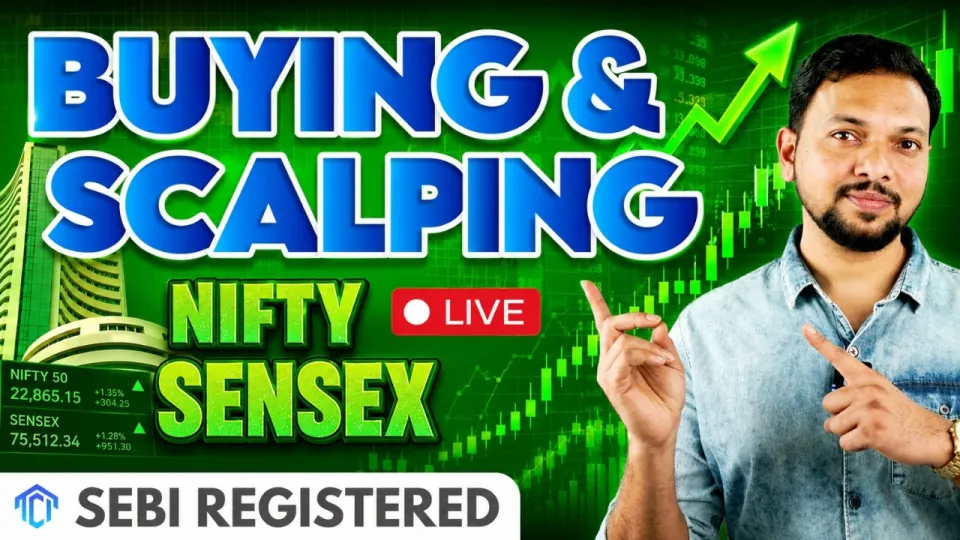
Video: LIVE TRADING Nifty BankNifty and SENSEX | Option Buying | 15 Oct #livetrading
Need articles like this for your video? They help promote it on YouTube and Google — order them in the Telegram bot @sat_sit_bot. It writes articles around your video, embeds the video and publishes them on popular niche websites (no ads). Free trial — 50 articles.
Key takeaways
- Three index products to track in one session: Nifty 50, BankNifty and SENSEX, each with its own lot size and volatility profile.
- Option buying caps risk at the premium paid but adds time decay, so entries need a trigger, not a hunch.
- A single losing day can wipe several winners: one viewer reported a 13k loss in a session while others were still holding losing positions.
- Strike selection matters more than direction: deep in-the-money options move like futures, far out-of-the-money options behave like lottery tickets.
- Trading Cafe India runs live option-buying sessions and is registered with SEBI as a Research Analyst under INH000013767.
Trading Nifty, BankNifty and SENSEX with option buying means choosing a direction for each index, buying a call or put at a strike that reacts fast enough to intraday moves, and capping the total premium you are willing to lose before the session starts. The approach works only when entries are triggered by price structure rather than by opinion, because a bought option loses value to time decay even when the index stands still. Live sessions such as the one streamed by TRADING CAFE INDIA on 15 October show how quickly that discipline is tested — and where a free demo or broker signup through this registration link fits into the learning process.
What live option buying across three Indian indices actually involves
Option buying on Indian indices is a premium-limited trade: you pay a fixed amount per lot and that is the maximum you can lose, but you also pay for time. Nifty 50, BankNifty and SENSEX each have their own lot size, tick behavior and sensitivity, so a trader watching all three in one session is effectively running three separate risk budgets. BankNifty typically swings hardest because banking stocks carry higher beta; SENSEX, tracked on BSE, is a 30-stock basket and often moves with a slight lag against Nifty. Buying options on all three at once multiplies both opportunity and the chance of over-trading, which is why most experienced intraday traders pick one or two instruments per day and treat the third as context.
How to plan an option-buying session in five steps
A repeatable plan beats improvisation, and the sequence below is the minimum structure a live session needs before the first order goes in.
- Mark the levels. Before the open, note the previous day's high, low and close for Nifty, BankNifty and SENSEX, plus the nearest round numbers where option writers cluster strikes.
- Pick the instrument. Choose one index as the primary vehicle for the day based on which has the cleanest trend and adequate option liquidity.
- Select the strike. Prefer at-the-money or slightly in-the-money strikes for intraday buying; they carry meaningful delta without the extreme premium of far OTM contracts.
- Define the trigger. Write down the exact price action that justifies entry — a breakout with volume, a retest that holds, or a failed move in the opposite direction.
- Set the loss limit. Decide the rupee amount you will lose before you stop for the day, and size the number of lots so that a full stop-out stays inside that number.
Choosing strikes and managing time decay when buying options
Strike selection decides whether a correct view actually makes money. A bought option's price has two components: intrinsic value and time value. Deep in-the-money contracts carry mostly intrinsic value and move almost one-for-one with the index, which makes them expensive but predictable. At-the-money contracts balance cost and responsiveness. Far out-of-the-money contracts are cheap, but they need a large, fast move to pay, and theta erodes them every hour the market stays flat. On expiry day the decay accelerates sharply, so an OTM buy held through a slow afternoon can lose most of its premium even if the index finishes slightly in your favor. Practical rules that follow from this: avoid holding bought options into the last hour without a strong trend, prefer the current or next weekly expiry depending on how much time you need, and check the bid-ask spread before entry — a wide spread on an illiquid strike can eat the entire expected gain.
Position sizing and the mistakes visible in real trading sessions
Risk control, not prediction, is what keeps an option buyer in the game. Because premium is the maximum loss per lot, position size is simple arithmetic: divide your per-trade risk budget by the premium per lot, then cap the number of simultaneous positions. Two or three open bought positions across correlated indices is effectively one large directional bet, not diversification. The recurring failure patterns in live index sessions are consistent: averaging down on a losing option, holding a position past the planned stop because the index "looks like it will come back", and re-entering immediately after a stop-out to recover the loss. Viewer reaction to the 15 October session illustrated the emotional side of this — one participant reported losing 13,000 rupees in a single day, another asked whether a call could still be held, and others were still carrying losses while discussing how far SENSEX could run. Each of those situations is a risk-management question, not a market-direction question.
Common questions traders ask during live index sessions
Most doubts raised around live Nifty, BankNifty and SENSEX streams fall into a few predictable categories, and answering them in advance removes hesitation during the session itself. The first is instrument choice: beginners often ask which index to follow, and the honest answer is the one whose chart they can read and whose option chain has tight spreads. The second is holding time — whether a position can be carried overnight — which depends on whether the trade was planned as a positional bet with a defined risk or as an intraday scalp; carrying an intraday buy into the close exposes it to gap risk and overnight decay. The third is recovery after a loss: the correct response to a losing day is to reduce size on the next session, not increase it. The fourth is where to find structured setups and tools, which is what resources like the Nifty and SENSEX setup page and the channel's free Telegram feed are for. Anyone considering a broker for execution should compare costs and platform stability first — for example through this XM link for international users — while Indian residents must trade only with brokers registered in India under FEMA rules. Crypto and gold calls referenced in the same sessions sit on separate platforms such as CoinSwitch.
Useful links from the session
- Lemonn registered calls and signup
- Nifty and SENSEX VIP setups
- Free Telegram channel
- XM broker link
- CoinSwitch Pro signup
Final thoughts on trading three indices in one session
Option buying on Nifty, BankNifty and SENSEX rewards preparation and punishes improvisation, and the difference shows up fastest on live market days when three charts compete for attention. Pick one primary instrument, size positions so a full stop-out is survivable, and treat time decay as a cost you pay for every hour a bought option sits open. The 15 October live session from TRADING CAFE INDIA is a useful reference point for how these decisions play out in real time, including the losses that come from holding too long. If you want to follow the same workflow with guided setups, start with the Lemonn registration link and paper-trade the process before committing real capital.
Questions & answers
Which index is best for option buying between Nifty, BankNifty and SENSEX?
There is no universal best index; the right choice is the one whose chart you can read and whose option chain has tight bid-ask spreads. BankNifty usually offers the largest intraday swings but also the fastest losses, while Nifty is comparatively smoother and SENSEX often lags slightly. Many traders use one index for execution and the others only as context.
Can I hold a bought option overnight if the trade is in loss?
Holding an intraday option buy overnight exposes you to gap risk and continued time decay, and it breaks the risk plan the trade was sized for. If the position was planned as intraday, closing it at the stop or at the close is the disciplined choice. Overnight holds should be planned in advance with a defined maximum loss.
How much capital should I risk per option-buying trade?
A common guideline is to risk no more than 1–2% of trading capital per trade, and to cap the total daily loss at a level you can absorb without changing your behavior. Since a bought option's maximum loss equals the premium paid, position size is simply your risk budget divided by the premium per lot.
What should I do after a losing day like the ones traders report in live sessions?
Reduce position size for the next session rather than trying to recover the loss immediately, and review whether the loss came from a bad entry or from breaking the stop. Re-entering straight after a stop-out is one of the most common ways a small loss becomes a large one. A written daily loss limit makes this decision automatic.
Source: LIVE TRADING Nifty BankNifty and SENSEX | Option Buying | 15 Oct #livetrading · Markdown version